
 当前位置:
当前位置:Advanced Electrochemical Energy Storage for Renewable Integration and Grid Applications: Status and Challenges
SEMINAR
CAS Key Laboratory of Materials for Energy Conversion
中国科学院能量转换材料重点实验室

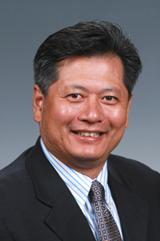
Speaker Prof. Z. Gary Yang
Pacific Northwest National Laboratory,
the US Department of Energy, Richland, WA
时间:6月13日(周日)下午14:00
地点:4号楼14楼第二会议室
联系人:温兆银、陈立东、王绍荣
Abstract:
The environmental consequences of burning fossil fuels and their resource constrains, along with the current trend of carbon monetization, have spurred great interests in using electrical energy derived from renewable sources, such as wind and solar. However, the intermittency of the renewable sources makes the instantaneous solar and wind power uncontrolled and unreliable. To smooth out the intermittency and make dispatchable of the renewable demands the implementation of electrical energy storage (EES). EES is considered as a critical enabler to future grids that is expected to be able to provide fuel (i.e. electricity) to plug-in hybrid vehicles, and allow for two way communication and digital balancing of the demand and supply (i.e. smart grid). Among the most versatile, viable technologies are batteries that are capable of reversibly storing and releasing electrical energy in accordance with the demand, via electrochemical reactions. A number of technologies have been explored, developed and even demonstrated for the stationary applications. However there has been very limited use due to the performance and economic limitations of these technologies.
As such, PNNL has carried out extensive efforts in the past few years in understanding the stationary applications and developing advanced electrochemical EES technologies for the particular applications. In addition to a sustained, significant level of internal support, the efforts are currently funded by the US DOE-Office of Electrical Delivery & Energy Reliability Office’s energy storage program and the newly created DOE-ARPA-E’s storage program. Activities include development of technologies such as Na-beta, redox flow and unique Li-ion batteries, along with modeling in the economic and technical feasibilities of potential technologies. The technological and economic gaps of the current technologies are quantitatively evaluated against current and future markets. This presentation will offer an overview on the needs, status and challenges of EES, in particular electrochemical storage technologies for the renewable and future grid applications. Progress on the research and development of varied battery technologies at PNNL will be highlighted and discussed.
Biography:
Dr. Yang is a Chief Scientist at the US Department of Energy’s Pacific Northwest National Laboratory (PNNL) where he has conducted applied and fundamental research into advanced materials and electrochemical energy conversion for electrical energy storage and power generation. He is currently leading efforts in developing advanced electrochemical energy storage technologies, in particular batteries, for renewable integration and grid applications. Previously he was a technical lead in solid oxide fuel cells (SOFCs), hydrogen storage nanomaterials and Li-ion batteries for electrical vehicle applications.
Dr. Yang was educated in materials science and engineering, with minor in electrochemistry. He earned his Ph.D. from the University of Connecticut and had two years stint as a postdoc/research scientist at Carnegie Mellon University. Dr. Yang has published over 150 scientific research papers and book chapters. He has organized or co-organized over 14 conferences or symposiums on clean energy related topics, and edited or co-edited 15 proceedings or special issues of journals. Dr. Yang is a Fellow of the American Society of Materials International (ASM International). Recently he was bestowed with a Federal Laboratory Consortium (FLC) award, in recognition of his outstanding contribution to SOFC technology development and transfer.