
 当前位置:
当前位置:Carbon/ceramic hybrid fibers - A promising approach to fill the gap between carbon and ceramic fibers

Carbon/ceramic hybrid fibers - A promising approach to fill the gap between carbon and ceramic fibers
Carbon fibers are highly valued for their lightweight characteristics, outstanding mechanical properties, and cost-efficiency. However, their limited oxidation resistance and low thermomechanical stability in hot air impose constraints on their utilization. Here, we present an approach to simultaneously achieve high thermomechanical proper-ties and high-temperature oxidation resistance in carbon–ceramic hybrid fibers featuring a highly aligned co-continuous topological structure through a continuous process. These hybrid fibers exhibit superior mechanical properties compared to pure carbon fibers with the same diameter including tensile strength, Young’s modulus and strain at fracture. Moreover, when subjected to thermal exposure under stress loading conditions in air, the ceramic constituents form a protective oxidized ceramic layer that effectively mitigates thermal oxidation and mechanical loading effects at elevated temperatures, surpassing the performance of carbon fibers. Our discovery offers a promising avenue for bridging the performance gap between cost-effective high-strength carbon fibers and expensive SiC counterparts with exceptional oxidation resistance, which can be applied in many fields wherever high thermomechanical loading and oxidation-resistant properties are important.
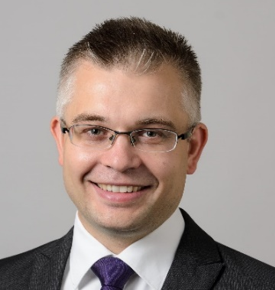 Stefan Schafföner is the Chair of Ceramic Materials Engineering at the University of Bayreuth, Germany, since 2021. He received his Ph.D. from TU Bergakademie Freiberg, Germany, in 2015. Afterwards he was a postdoc at the Norwegian University of Science and Technology before joining the University of Connecticut as an Assistant Professor in 2018. Prof. Schafföner published more than 100 peer reviewed articles. He received funding and scholarships from the German Research Foundation (DFG), the Alexander von Humboldt Foundation, the German Academic Exchange Service as well as from the European Commission, among others. As a student he spent two and a half years at Tsinghua University, Huazhong University of Science and Technology and Wuhan University of Science and Technology.
Major areas of research are materials science and engineering aspects of ceramic matrix composites, polymer derived ceramics and powder based high performance ceramics. Furthermore, the development of novel processes and materials, the up-scaling and prototype manufacturing in focus of his scientific work.